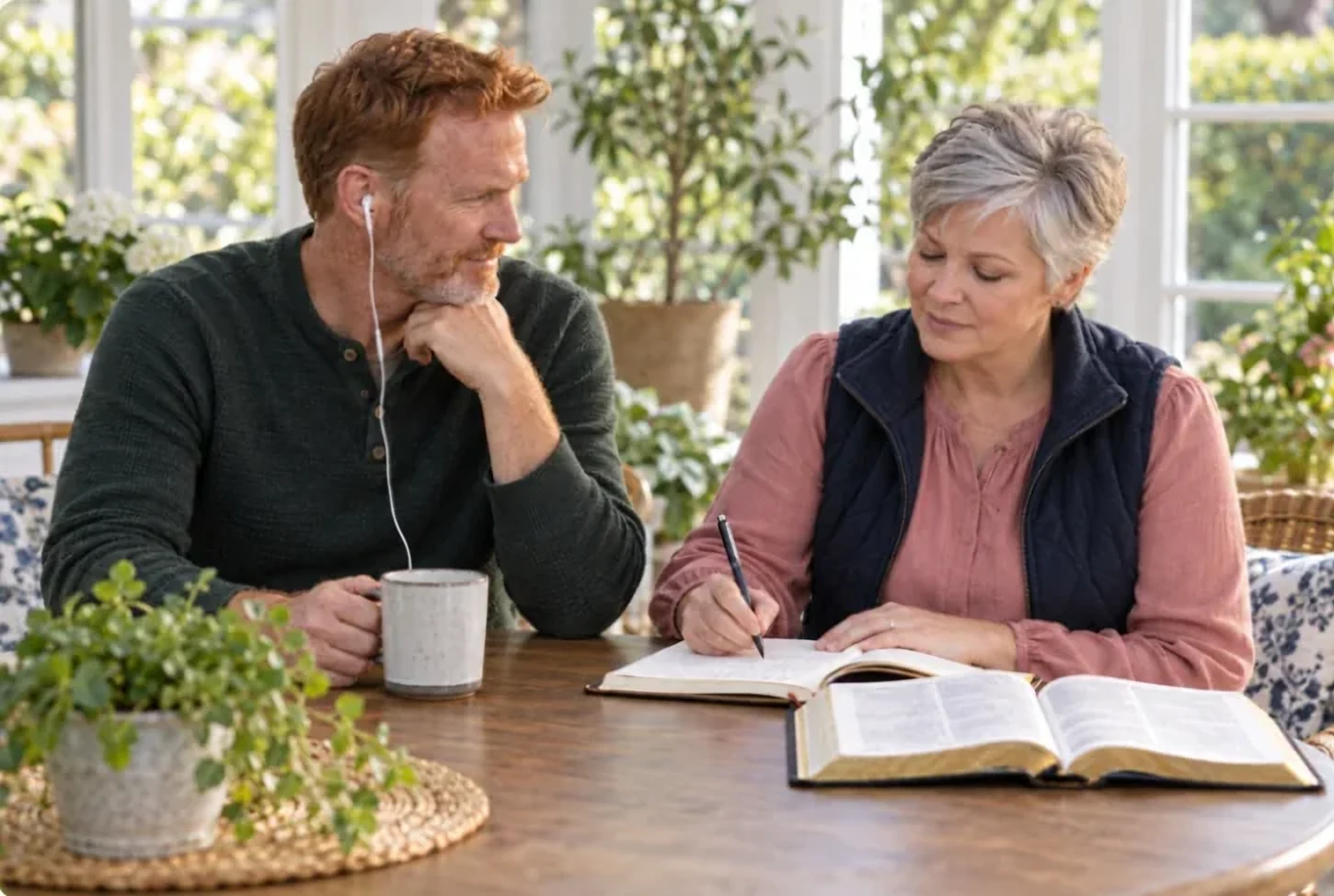
One spouse comes alive in a deep Bible study with a notebook and three commentaries. The other meets God most easily in worship, or on a walk, or with a hammer in hand serving a neighbor. Then the study spouse quietly starts to believe the other one isn't serious about their faith, and the worship spouse quietly starts to feel judged, and neither has said any of it out loud.
Here's the reframe that protects marriages from this: spiritual growth has more than one shape. Scripture itself describes a body with many members, hands and eyes and feet, all necessary, none interchangeable. The modern church has quietly taught couples a ranked system instead, with quiet times and study at the top and everything else arranged below, and marriages pay for that ranking.
Name your styles out loud
Start with a plain conversation, in a calm moment: "Where do you actually feel closest to God?" Not where you're supposed to, where you do. Some people meet God in silence, some in song, some in service, some in Scripture, some in nature, some in conversation with a small group.
The exercise matters because most couples have never asked it. They've assumed the answer, usually by assuming their own answer is the universal one. Naming the styles turns a hidden disappointment into a known difference, and known differences are workable in a way silent ones never are.
Retire the ranking
The most common wound here is the spouse who studies more, or reads more, or has a more visible devotional life, quietly or not so quietly treating their style as the standard. If your spouse meets God while serving, and you meet God while studying, neither of you is the mature one. You are two members of one body, and the body needs both.
The test of a growth style is the fruit, not the format. Is your spouse growing in patience, in gentleness, in faith? Then their style is working, whether or not it looks like yours.
Support their style with real interest
Support sounds like: driving them to the retreat you wouldn't choose. Guarding their quiet mornings without complaint. Asking real questions about what God's been showing them, and listening without grading the answer. It also means not scheduling over the small group that feeds them, and not treating their worship music preference as a character flaw in the car.
Support doesn't mean sharing the style. It means respecting it enough to make room for it.
Share yours without demanding
The other side: don't force your style on your spouse as the price of spiritual respectability. The wife who wants to do a couples devotional can invite warmly, accept a no without sulking, and keep her own practice rich rather than shrinking it in protest. The husband who loves worship can invite his wife and leave her honest answer alone. Spiritual life in a marriage thrives on invitations, and dies on requirements.
Pray for them, not just about them
There's a subtle difference between praying for your spouse's growth and praying about your spouse's deficiencies. One is intercession. The other is surveillance with religious packaging, and spouses always know which one it is. Pray for their growth, and ask God to teach you what He sees in them that you've missed.
When the styles are really different beliefs
Sometimes "different growth styles" is the polite name for a real gap: one spouse believing, one spouse not, or believing very differently. That deserves its own honest conversation, and often its own article. The short version here: gentleness, no pressure, no weaponized worry, and a marriage that stays warm across the difference. Faith is caught more than it is argued, and no spouse was ever argued into the kingdom by the person they share a bed with.
KJV reflection
"Having then gifts differing according to the grace that is given to us..." - Romans 12:6
Paul spends two whole chapters of Corinthians and a passage here in Romans dismantling the very ranking couples keep building. The eye cannot say to the hand, I have no need of thee. "Now are they many members, yet but one body" (1 Corinthians 12:20). Your marriage's
spiritual life is one body with two members, and its health has never depended on both members being the same kind of member.
What to try this week
Ask each other, in a calm moment: where do you actually feel closest to God? -
Name your own style without ranking your spouse's against it. -
Support one element of your spouse's style this week with real, - uncomplaining action.
If you've been praying about their deficiencies, switch to praying for their - growth, and don't tell them you switched.
Care and safety
Different styles are healthy. Different beliefs are hard but livable with gentleness. What's not livable is a spouse using faith to control, to shame, or to dominate decisions, and that's called spiritual abuse. If that's your marriage, seek help from a counselor or pastor outside the marriage's power structure, and individual professional support. And if the different-beliefs gap brings contempt or cruelty, that's not a styles difference. That's a respect problem, and it needs more than acceptance.
These resources educate and encourage. They do not diagnose, treat, or replace qualified professional care.
Related resources
What faith practices help married couples connect? -
- How do couples choose a church together? How can we pray together when it feels awkward? -
Where to go from here
Couples with different growth styles usually differ most on one of the three foundations, and knowing which one saves years of quiet misjudging. The Marriage Checkup shows you. It's offered in exchange for your first name and email, it's not a test anyone can fail, and it's built on love for God, love for your spouse, and love for the Word. Differences get much easier to honor once they're mapped.