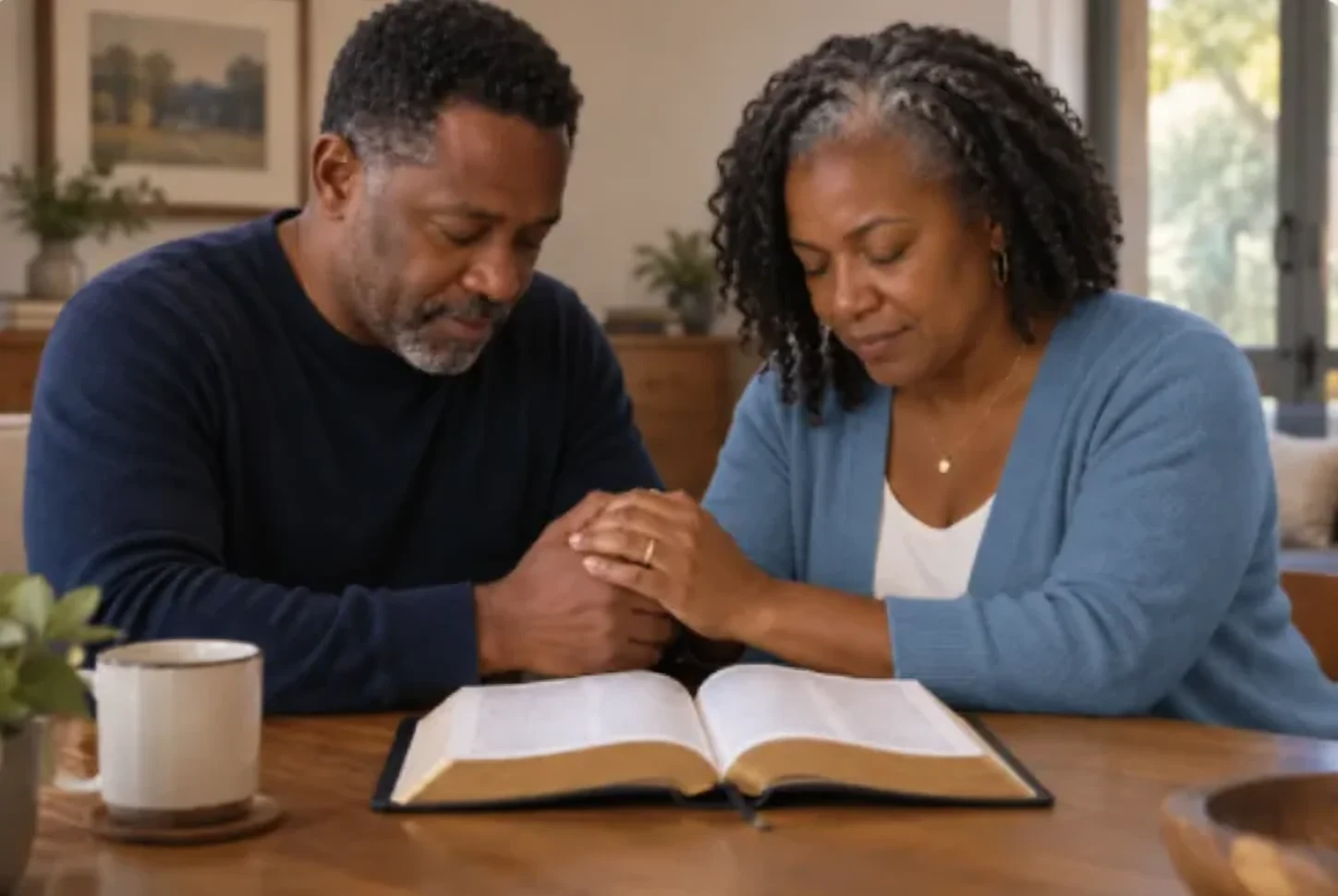
Here's the false choice a lot of couples live inside: either you forgive, which gets defined as pretending it never happened, or you stay honest about the hurt, which gets defined as holding a grudge. Both options are wrong, and both are quietly destroying marriages.
The real thing is different. Forgiveness is the decision to release the debt. The hurt spouse stops requiring payment, stops collecting interest, stops billing the marriage monthly for an old offense. But releasing a debt is not the same as deleting the lesson. The lesson is exactly what keeps the marriage from taking the same wound twice.
Name the hurt fully first
Forgiveness that skips this step isn't forgiveness. It's amnesia performed under pressure. Before any release happens, the hurt needs to be said out loud, in full, to the person who caused it, and received without a defense. "Here is what it did to me."
This is why forgiving too fast often doesn't work. A spouse who forgives on the day of the injury, before the hurt has even been named, has usually just agreed to carry it silently. Real forgiveness happens after truth, not instead of it.
Understand that forgiveness is repeated
This is the part that surprises people. Forgiveness is rarely a one-time decision, because the hurt returns. Something triggers the memory, and the bitterness knocks on the door again, wearing the same coat.
That's not failure, and it doesn't mean you never forgave. Peter asked Jesus how many times he had to forgive a brother who kept sinning against him, and the answer, seventy times seven,
was not permission for the brother to keep sinning. It was a description of what forgiving the same wound actually costs. Each time the memory rises, you release it again. That's the work.
What forgiveness doesn't require
Forgiveness does not require trust. Trust is rebuilt separately, by different means, on a different timeline. A spouse can be fully forgiven and still need to verify, still need accountability, still need the phone in the kitchen for a season. Treating those needs as proof of unforgiveness is one of the most common manipulations in marriages, and it's worth naming plainly: you can release a debt and still change the locks.
Forgiveness doesn't require pretending there are no consequences. A spouse who broke trust with money can be forgiven and still not hold the checkbook.
And forgiveness does not require reconciliation in every case. Reconciliation takes two willing people. Forgiveness takes one.
How to actually do it
The mechanics are smaller than people expect. Forgiveness usually involves a specific release, spoken out loud, to your spouse or to God: "I've been collecting on this for two years. I'm releasing it. It's not the bill anymore." Some couples write the injury down and destroy the paper. Some make it a standing prayer.
Then, when the memory resurfaces with its ledger open, you say it again, quietly, to yourself. The pain of the memory is allowed. The billing is not.
Watch for the resentment that forgiveness was supposed to prevent
If you forgave, and you're still bringing the offense into every third argument, one of two things is true. Either the forgiveness was never real, or the wound was never fully named in the first place. Both have the same cure: go back and tell the truth about the hurt, more completely than you did the first time.
The biggest injuries
Daily-life forgiveness, sharp words, broken small promises, missed dinners, is marriage's ordinary maintenance. The big betrayals, affairs, hidden money, patterns of cruelty, are a different category. Those need both forgiveness and help: a licensed counselor, a pastor, sometimes both. Forgiveness is still the direction. It's just not a self-guided project at that scale, and no spouse should be pressured to run that distance alone.
KJV reflection
"And be ye kind one to another, tenderhearted, forgiving one another, even as God for Christ's sake hath forgiven you." - Ephesians 4:32
Notice the standard: as God for Christ's sake hath forgiven you. God's forgiveness is real, and it also did not pretend the debt was nothing. The cross is the full naming of the cost. Human forgiveness that skips the cost isn't more spiritual. It's less. And the parable of the unforgiving
servant in Matthew 18 closes with a warning about a forgiven servant who billed his fellow servant, a picture of exactly what happens in a marriage where forgiveness was announced but never practiced.
What to try this week
Name one old hurt that's still billing your marriage monthly. Say it out loud, - fully, once.
If it's been named, make the release explicit: "I'm not collecting on this - anymore."
Expect the memory to return. When it does, release it again. -
Separate the debt from the lesson: write down what the marriage learned, so - the release doesn't cost you the wisdom.
Care and safety
Forgiveness is between you and God. Safety is between you and reality. Forgiving a spouse does not mean staying in the line of fire, and no version of Christianity requires it. If the hurt involves abuse, coercion, or fear, individual professional support comes first. The National Domestic Violence Hotline (1-800-799-7233) can help you think, safely, at any hour.
These resources educate and encourage. They do not diagnose, treat, or replace qualified professional care.
Related resources
How do we repair after an argument? - How can we rebuild trust after a broken promise? - How should couples address resentment? -
Where to go from here
Forgiveness, boundaries, repair. These are the load-bearing walls of staying close, and they're a third of the book. Holy Matrimony - How To Stay Connected When The World Is Pulling You Apart treats grace as a practice, not a mood. It's in final formatting with the publisher now, and we'll share where to get it as soon as it's available.